
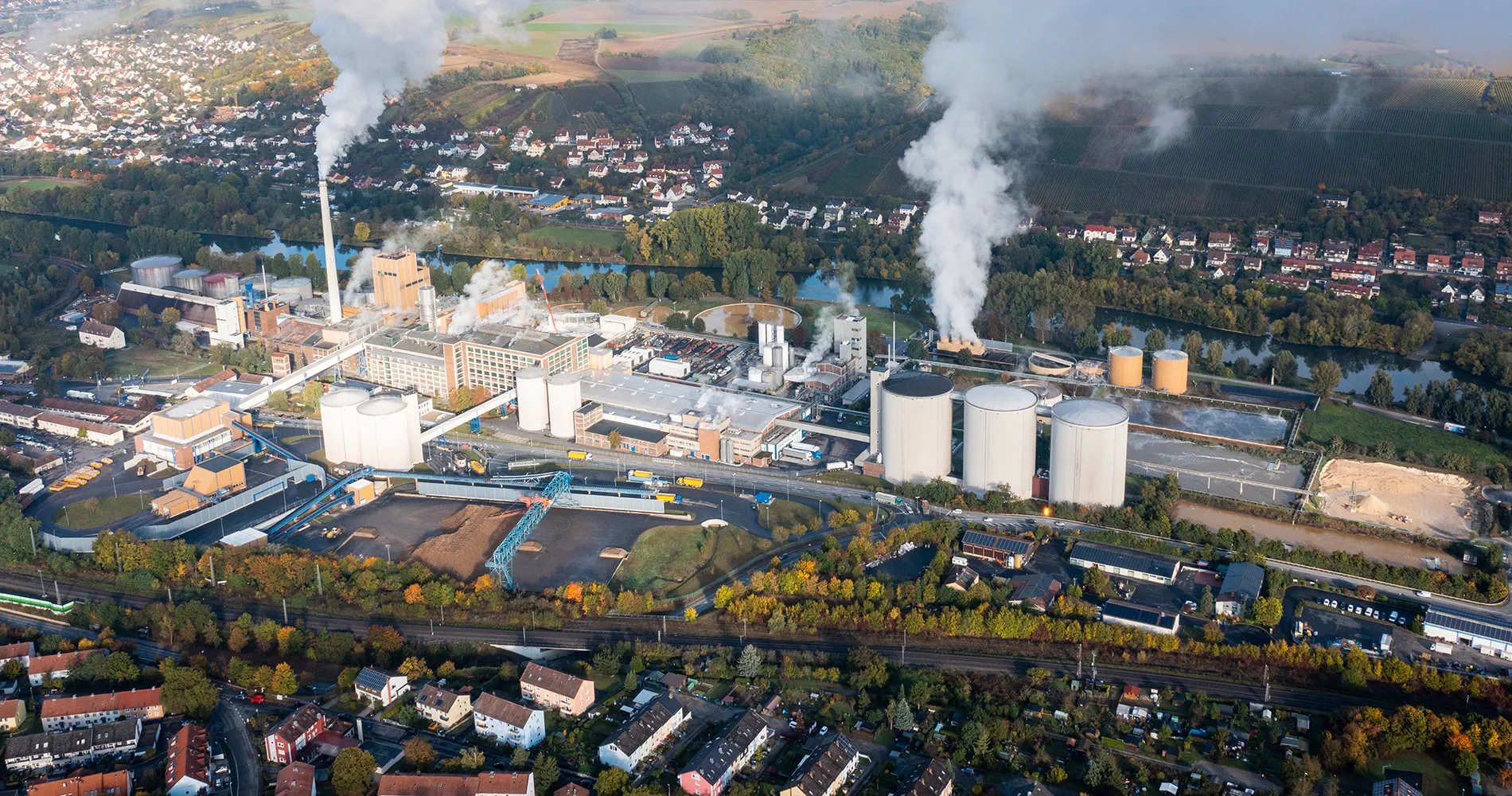
Ochsenfurt plant

Factory tours
We offer factory tours only during the sugar beet processing campaign, from October to December/January. For more information, please contact the factory you would like to visit directly.
Address
Südzucker AG - Werk Ochsenfurt
Marktbreiter Straße 74
97199 Ochsenfurt
Germany
Phone: +49 9331 91-0
E-mail: [email protected]
About the factory
In its first campaign in 1952, the plant had already achieved a daily processing capacity of 2,400 tonnes of beets, a peak value for European sugar factories at that time. Ochsenfurt is still one of the largest and most important factories in the Südzucker Group.
The plant operates twenty-four hours per day during the beet campaign between September and January. Several thousand tonnes of beets are delivered and converted to sugar daily. During an average campaign, the annual sugar needs of a German citizen are met in less than two seconds. The factory can produce enough sugar in one year to satisfy the needs of 6-7 million consumers.
History of the factory
1951
Founding of Zuckerfabrik Franken GmbH and construction of the Ochsenfurt plant.
1952
First beet campaign with a duration of 53 days and beet processing of around 100,000 tons.
1956
Start of packing small packages for households (1-kg bags).
1960
Start of sugar cube production.
1967
Construction of a fondant plant as a first important step in the production of specialty products.
1973
An invert sugar plant goes into operation.
1975
Completion of the 115 meter high chimney of the sugar factory.
1976
Rebuilding of the fondant plant.
1977
Launch of the production of sugar cubes as "Glückswürfel".
1980/81
Foundation and construction of the district heating center: Exhaust heat from sugar factory processes is used to supply heat to households and businesses in Ochsenfurt.
1984
Commissioning of a fully automated high-bay warehouse.
1988
Merger of Zuckerfabrik Franken GmbH with Süddeutsche Zucker-Aktiengesellschaft to form Südzucker AG Mannheim/Ochsenfurt.
1991
The beet yard is rebuilt due to increased daily beet processing capacity and the difficult traffic situation in the city.
1990s
Various further investments and new buildings (e.g. juice purification, extraction tower).
2001
Shutdown of the Zeil am Main factory. Ochsenfurt takes over sieving and sugar silos as an external warehouse.
since 2017
Extension of campaign lengths up to 120 days.